Charles Jason Tinant
I teach environmental science, engineering, geospatial technologies, and mathematics at Oglala Lakota College on the Pine Ridge Reservation, where I’ve been on the faculty since 2005. I’m a hydrologist by training—geological engineering (BS), water resources (MS), and civil & environmental engineering (PhD, South Dakota School of Mines)—with dissertation research on hydrologic and ecological drought in the semi-arid Northern Great Plains.
My work sits at the intersection of water, data, and education. Over the past two decades I’ve helped build NSF-funded STEM and pre-engineering pathways at tribal colleges, authored watershed protection plans with the Oglala Sioux Tribe’s Environmental Protection Program, and developed environmental data science programs that combine geospatial analysis, reproducible research, and open-source software. Increasingly, I’m exploring how AI-assisted workflows, cloud computing, and cyberinfrastructure can expand access to research while respecting Indigenous data sovereignty and community priorities.
My approach is systems-oriented, place-based, and collaborative. I work with students, faculty, tribal programs, and research partners to connect technical methods with local knowledge and community needs—which means thinking carefully about who controls data, who benefits from its use, and how open-science practices can support, rather than override, tribal data governance.
Research & Professional Interests
- Watershed hydrology in the Northern Great Plains—drought, flood frequency, intermittent streams, and semi-arid systems most recent project: FFA_regional-skew
- Environmental data science, GIS, and remote sensing—geospatial analytics and spatial data infrastructure
- Indigenous data sovereignty—CARE, FAIR, and community-centered data governance
- Open, reproducible workflows in R, Python, and GitHub—including turning one-off research scripts into documented, reusable software, most recently an audio transcription pipeline using WhisperX and pyannote
- Practical applications of AI and machine learning in research, teaching, and scientific workflows
- Cyberinfrastructure for tribal colleges—cloud computing, NAIRR, CASC, and distributed research environments
- Place-based STEM education and open educational resources grounded in community priorities across the Northern Great Plains
- Mentoring others into engineering, environmental science, computing, and research careers—and building equitable partnerships among tribal colleges, universities, agencies, and cyberinfrastructure providers
What You Will Find Here
This site, and the repositories behind it, are where I teach, prototype, and share community-facing work. Many projects begin as practical solutions—automating an analysis, documenting a workflow, making environmental data easier to use—and gradually evolve into reusable tools for students, collaborators, and other educators. Everything here is rapidly evolving: over the next few months I’ll be moving several private repos into public view, prioritizing lesson plans from courses I’ve taught, so others can fork and improve them to meet their own goals.
Working Philosophy
I enjoy building things that are useful, understandable, and maintainable. Whether I’m writing code, designing curriculum, or developing research workflows, the goal is subtraction: reduce unnecessary complexity so others can build on the work—and so it stays useful long after the original project has ended. There’s a Zen quality to engineering done well—keeping a beginner’s mind, giving full attention to the task at hand, and staying with the circle of creation by letting go of a design the evidence has outgrown.
I think about knowledge the way constructivists do, and I update it the way Bayesians do. People don’t receive understanding; they grow it from experience and reflection—so my courses and tools are scaffolds for building, not deliveries. And nothing I make is final: every model, lesson, and workflow is a prior, stated as clearly as I can manage, waiting to be revised by evidence. Robust design spirals rather than marches—through tinkering and reflection, active and passive modes, explicit models and the implicit knowledge that an attuned practice builds.
Good engineering begins with listening, because the most important priors are held in relationship. Twenty years at Oglala Lakota College have taught me what Lakota philosophy holds at its center—Tákuškaŋškaŋ, the energy that moves and interconnects all living beings, Mitákuye. Knowledge behaves the same way: it doesn’t sit still, it moves through long-term relationships with the land, communities, educators, practitioners, and students who understand the landscapes, histories, and priorities of the places where the work happens. Macrosystems ecology says something similar in its own dialect—nothing exists at one scale, and what matters moves across them. A stream gauge is nested in a watershed, a watershed in a climate system; a classroom in an institution, an institution in a policy environment. Durable solutions respect both the nesting and the relations.
Collaboration
I welcome collaboration on environmental data tools, hydrologic research, geospatial science, tribal-college STEM education, Indigenous data governance, and AI-assisted scientific workflows—and I’m always glad to share ideas with educators building reproducible, locally relevant data-science curricula and open educational resources. And, most of all, I welcome collaboration on fun and interesting projects that serve no purpose other than to spark joy.
Beyond Work
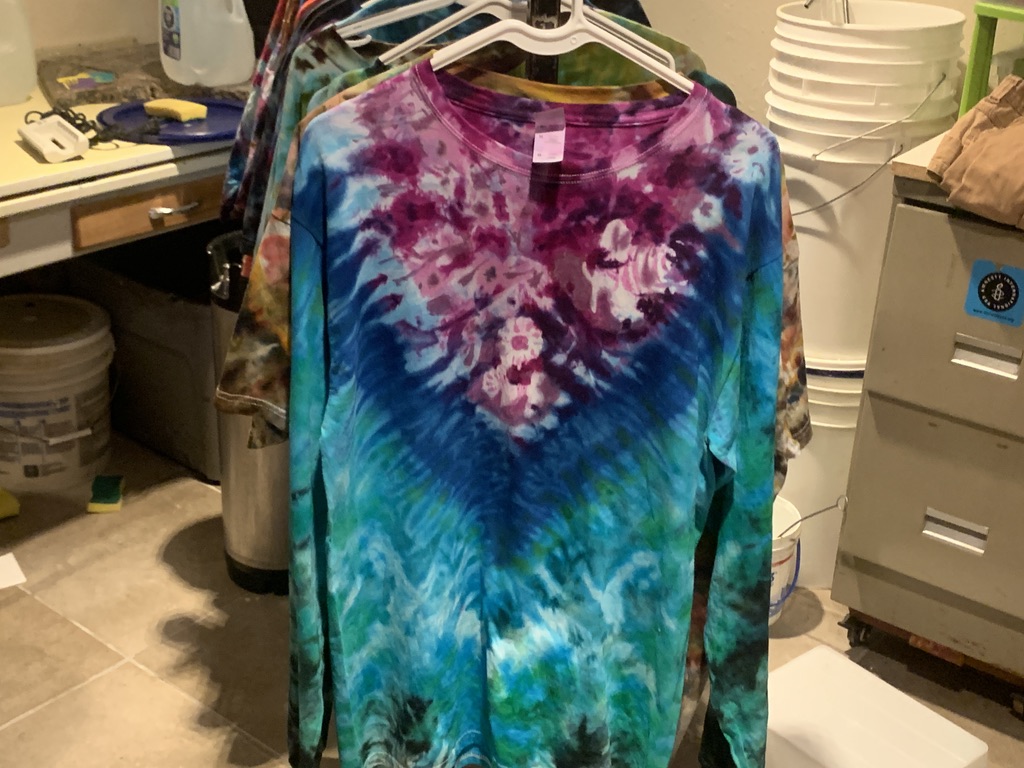
Outside the classroom and the lab, I enjoy hands-on craft traditions: textile dyeing and batik, woodworking, musical instrument building, essential oil blending, and other bespoke work that rewards careful observation, experimentation, and iteration. The next stop in turning ideas into objects: putting a small blacksmithing forge to use. Those same habits shape how I approach teaching, software, and research.